Story:
In March 2012, there was a discussion on the classiccmp
mailing list about some "remainings" of the former Computer
Museum Aachen (CMA) in Germany. As far as I understood, a few
years prior to 2012, the building in which the museum was
residing, had to be torn down which is why the collection had
to find a new home. Eventually, most of the collection could
be saved thanks to the Computer History Museum (CHM) in the
USA and a donation of SAP. The latter made possible the
shipping from Germany to California from a financial point of
view. The collection is since then known as the "SAP
collection" and stored at the CHM, of which some artefacts are
exhibited for visitors to be admired. However, some bits and
pieces, found their way in an old trainstation warehouse in
Dortmund. A very motivated person, Alexander, got informed
about the location of the vintage systems by a local fellow
and, in turn, tried to locate and contact the tenant of this
warehouse via the landlord. It turned out that the content
stored there had to be cleared within two months, as the
building was going to be sold. Thankfully, Alexander then
tried to contact collectors willing to save these remainings,
as everything not saved would otherwise have been scrapped.
A post in a forum dedicated to Robotron computer systems
(Vintage computer manufacturer from the former German
Democratic Republic) was placed with images of what was stored
in the warehouse. The approach was "first come, first serve"
in order to give away for free everything to collectors,
whoever wanted to save these.
Then, a list member of the classiccmp mailing list posted a
link to the Robotron forum thread. There, I was able to
contact Alex who managed the give-away of the computer
remainings in order to ask him for information about and
identification of the parts. A lot of phone calls and several
visits to the warehouse followed over the next three months
during spring 2012.
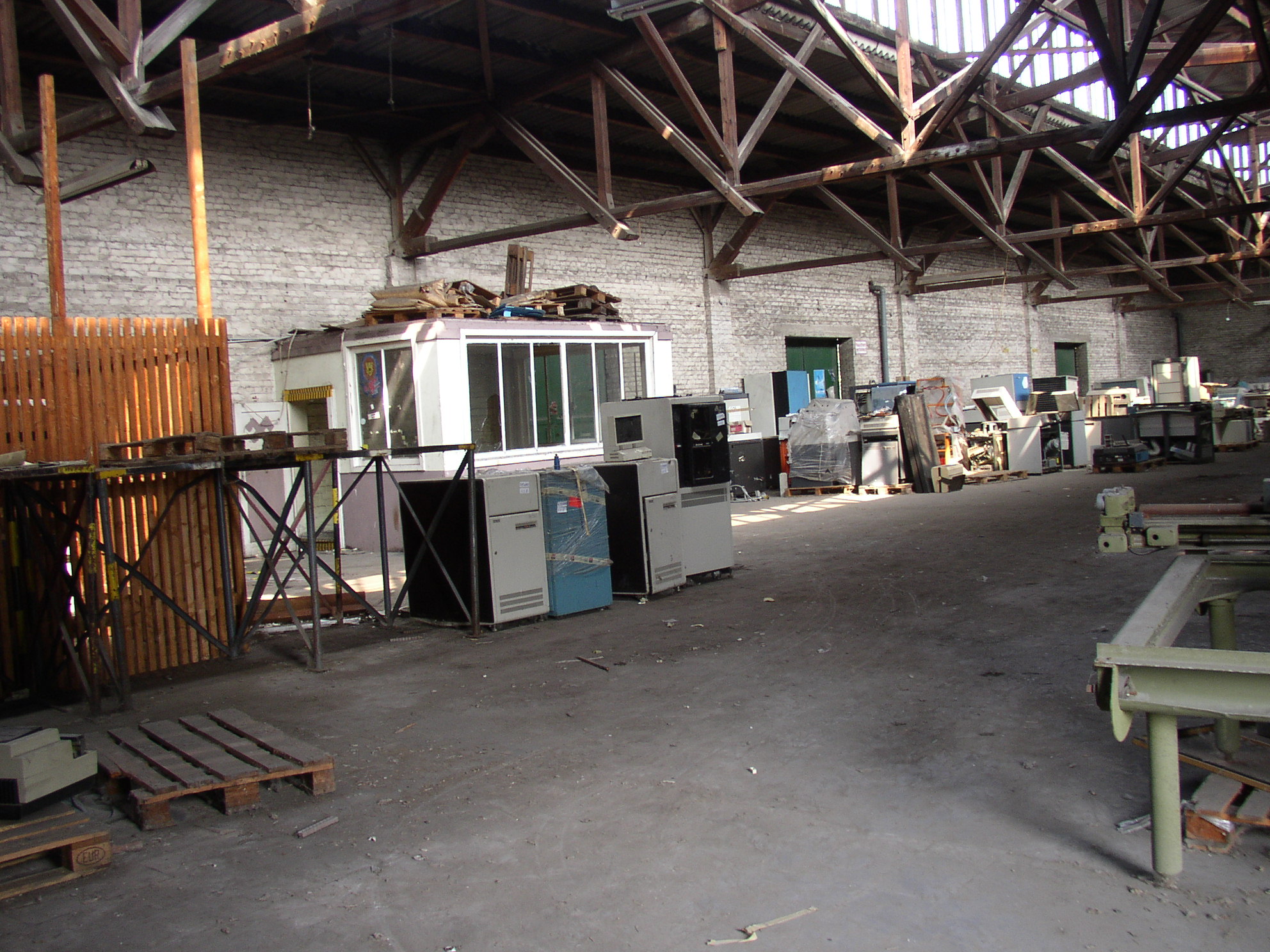
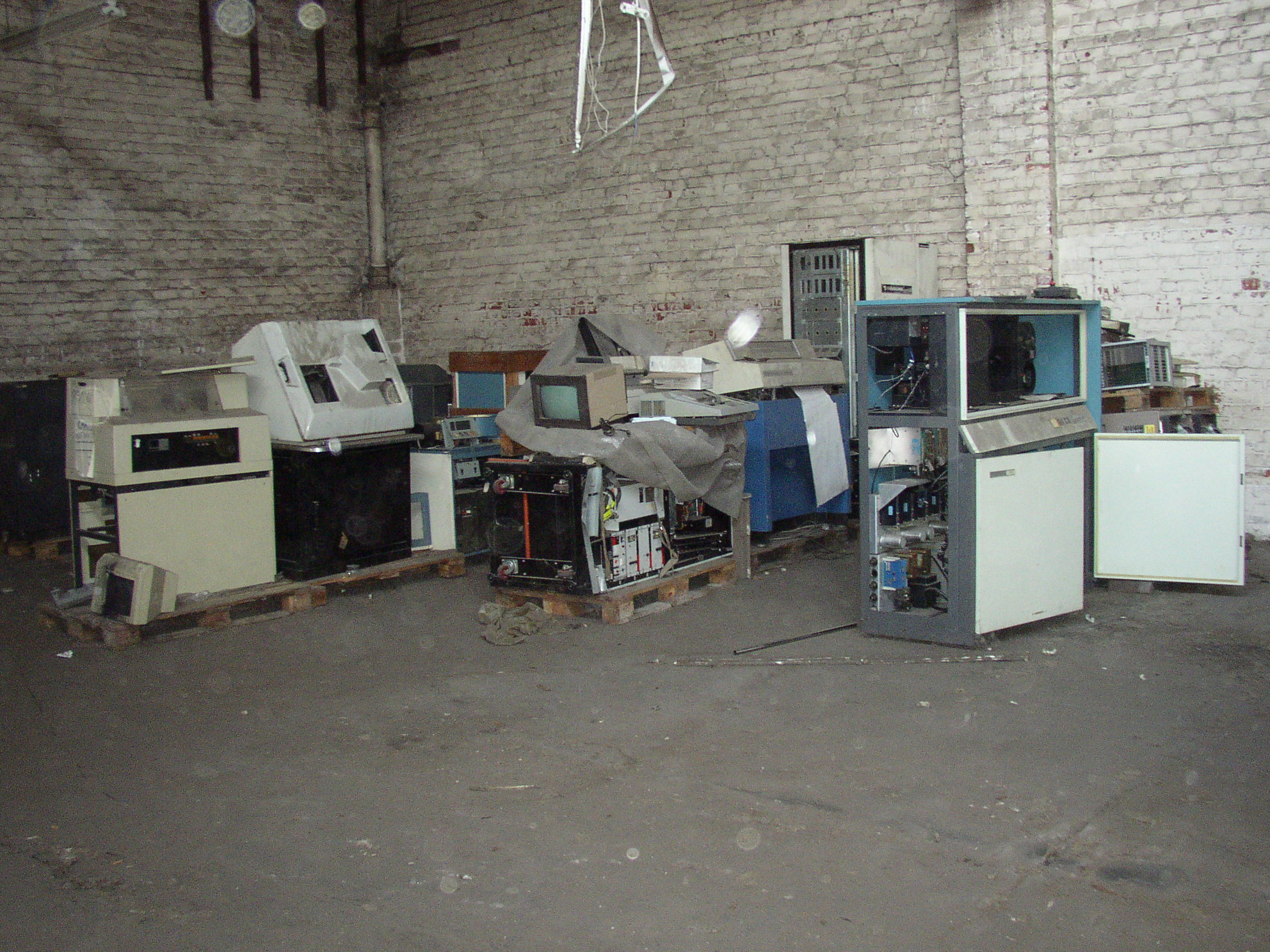
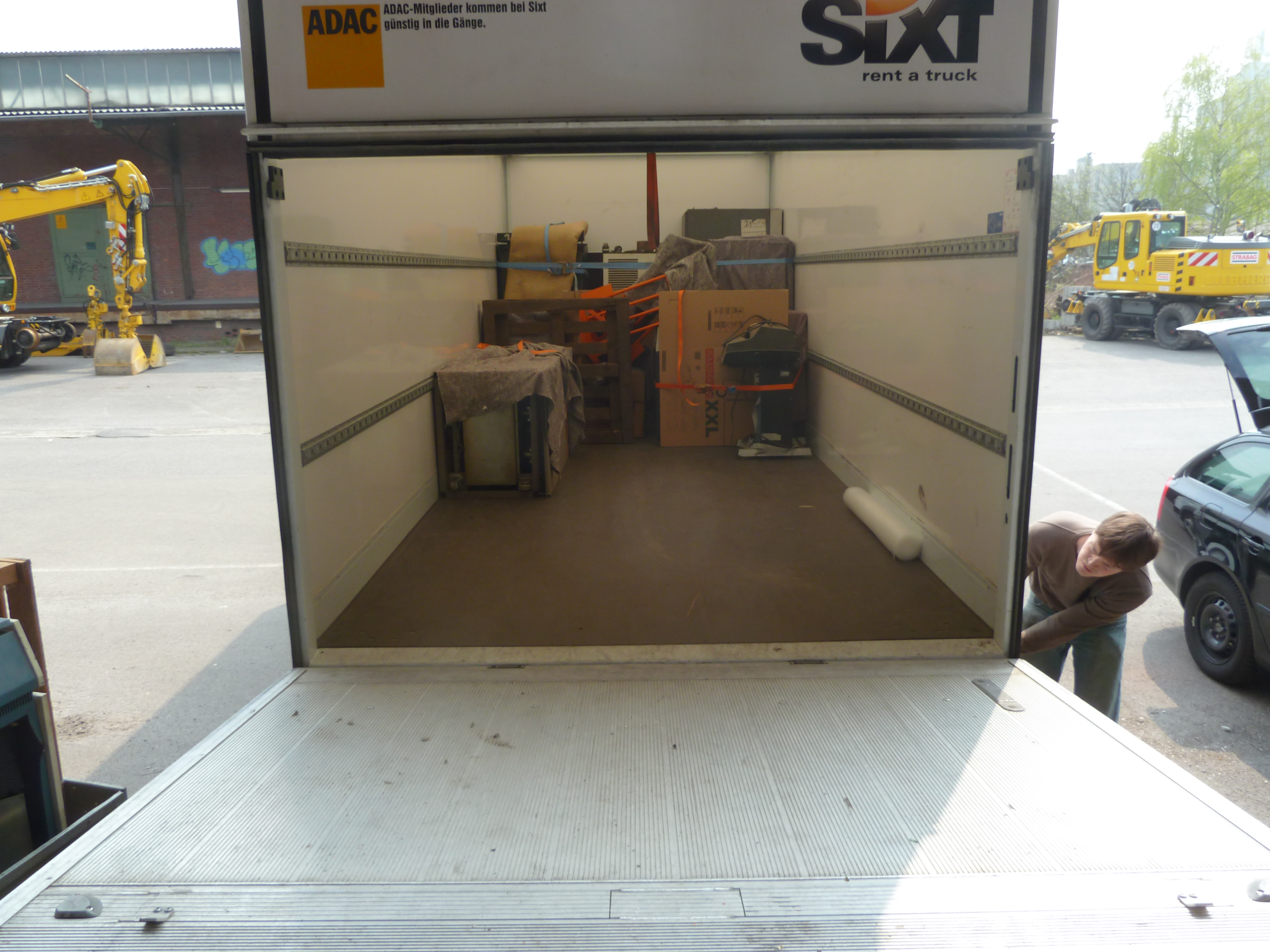
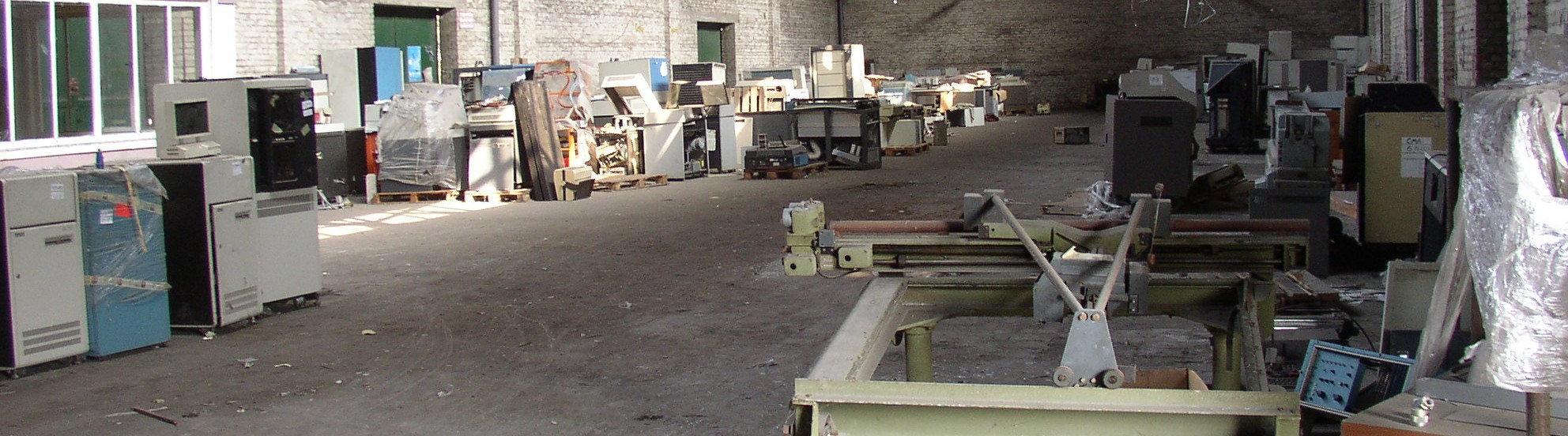
During my first visit there, I took the picture that is shown
above.
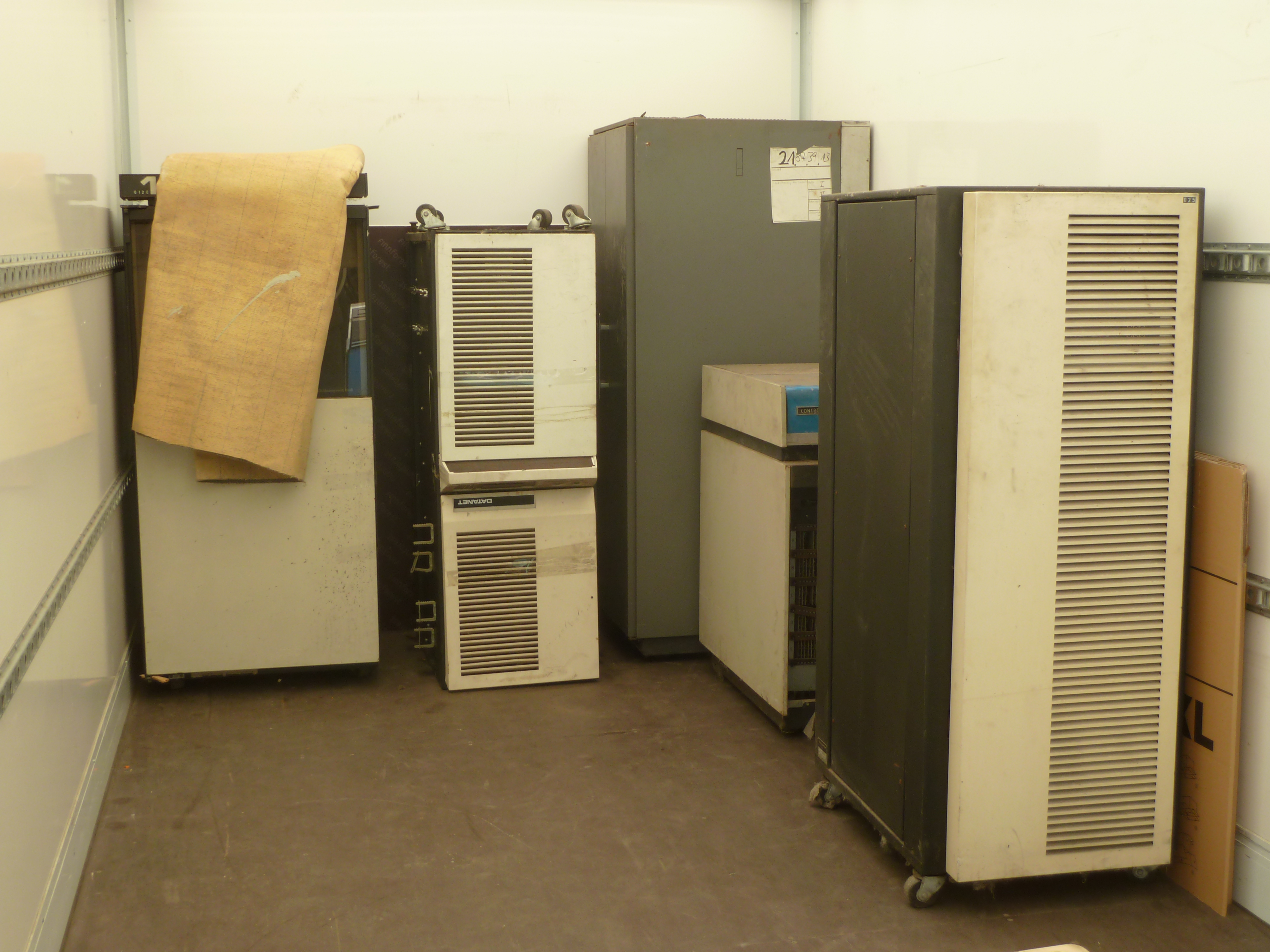
A friend of mine and I drove to Dortmund with a 7.5 ton
truck.
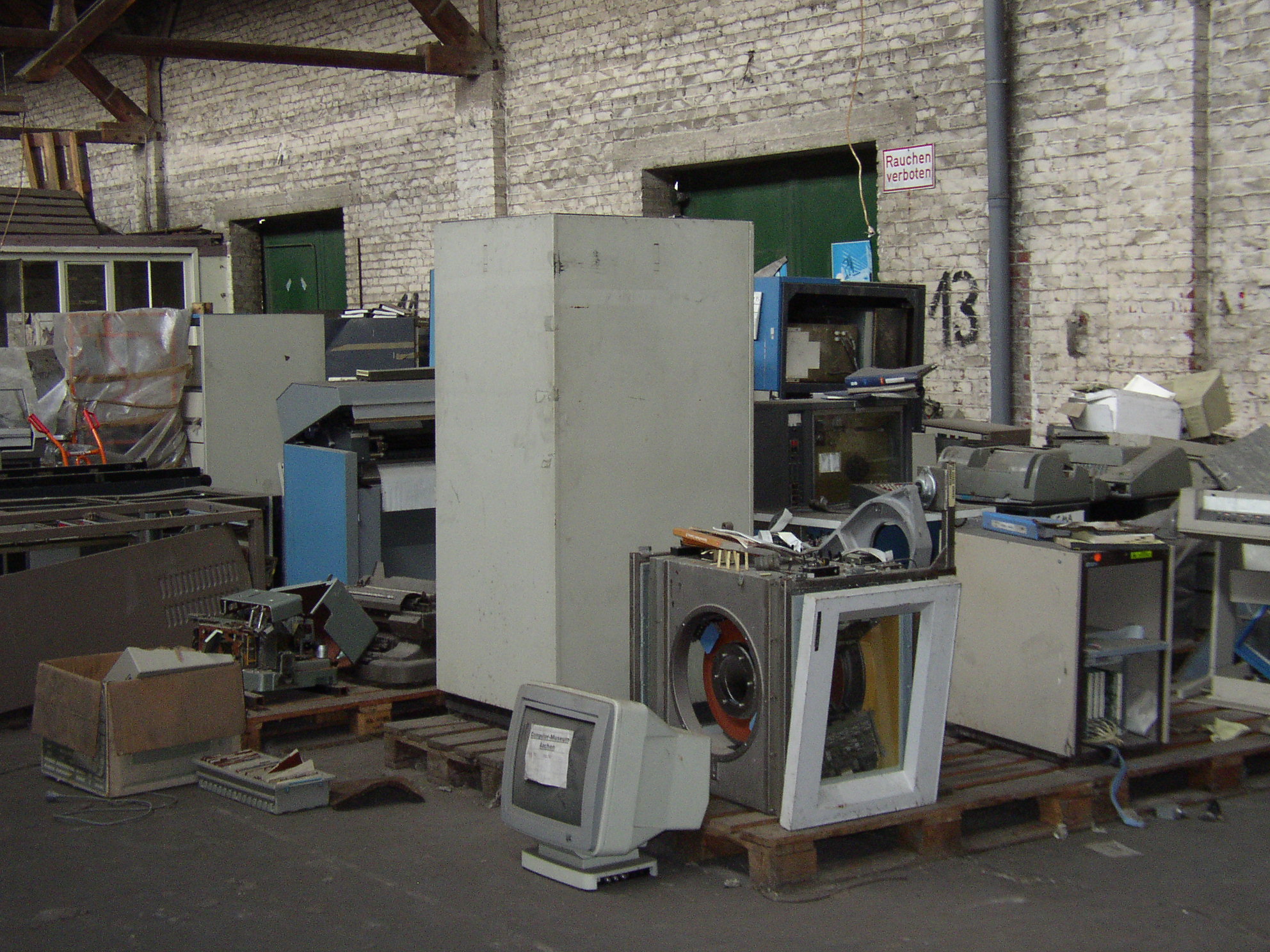
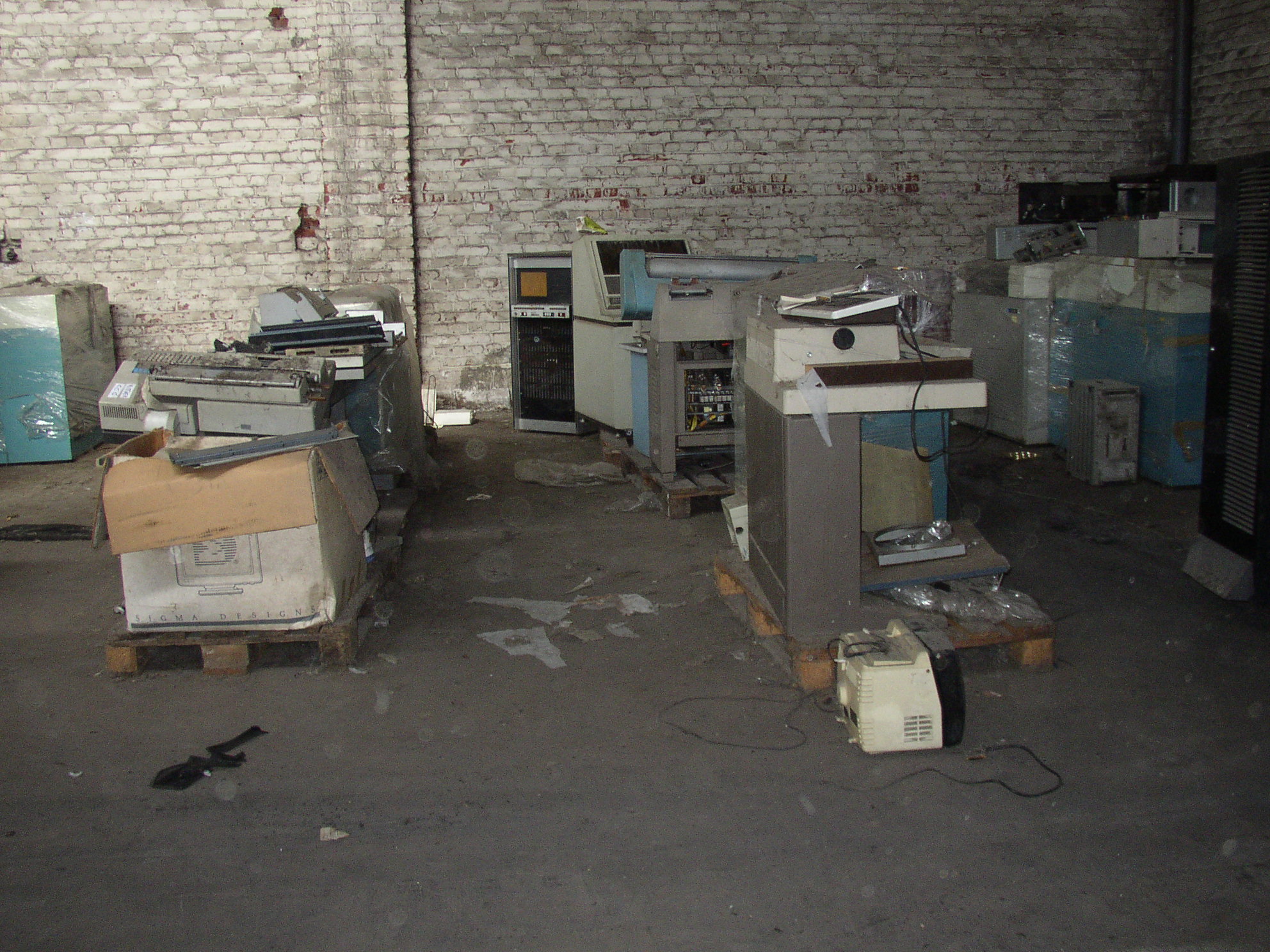
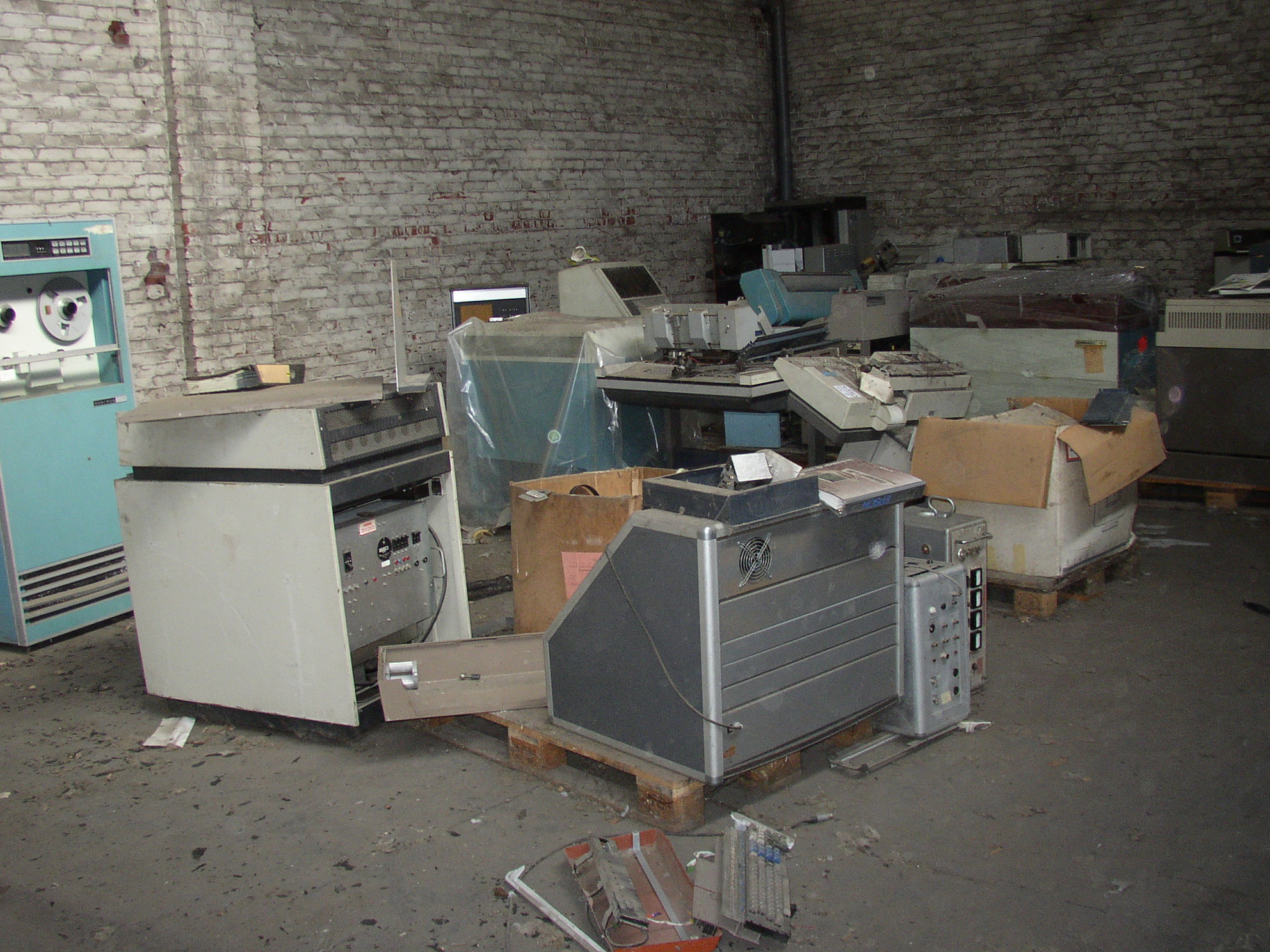
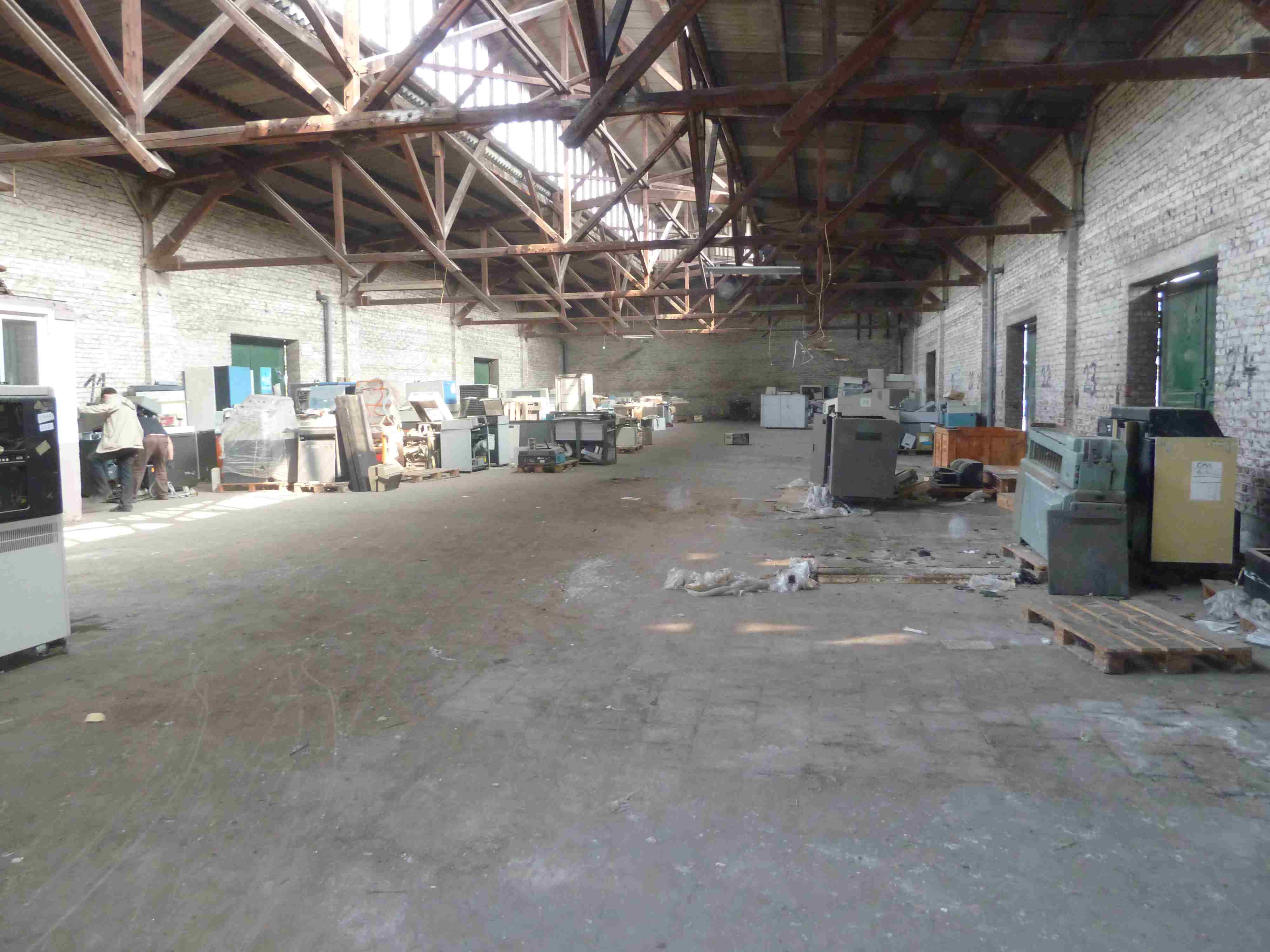
When we arrived, I was literally shocked to see such amounts
of historic computer and peripherals "artifacs" stored in a
warehouse. The roof was in bad shape (water leaks) and pigeons
were flying in there. The hardware surely saw better storage
conditions in the past.
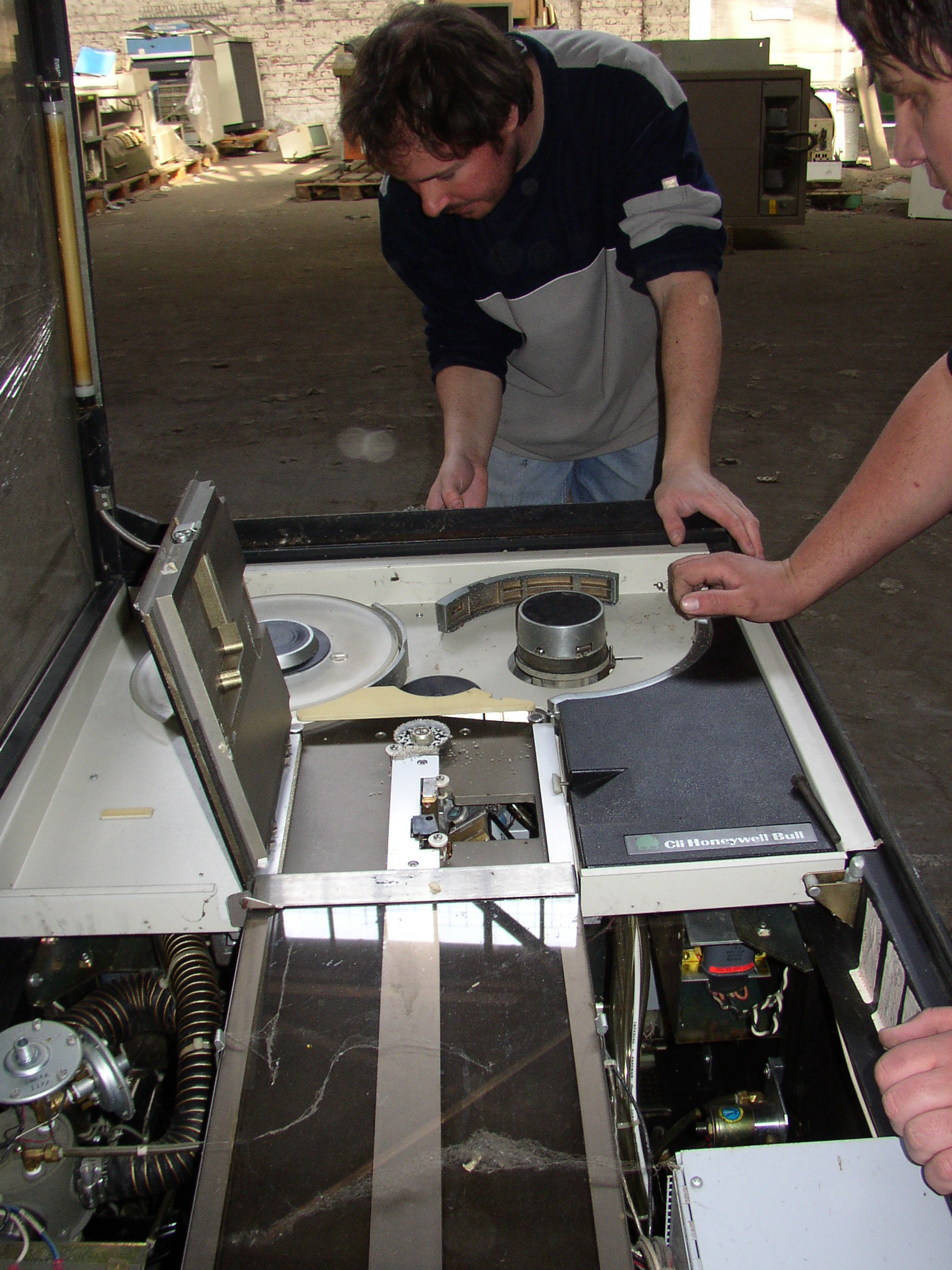
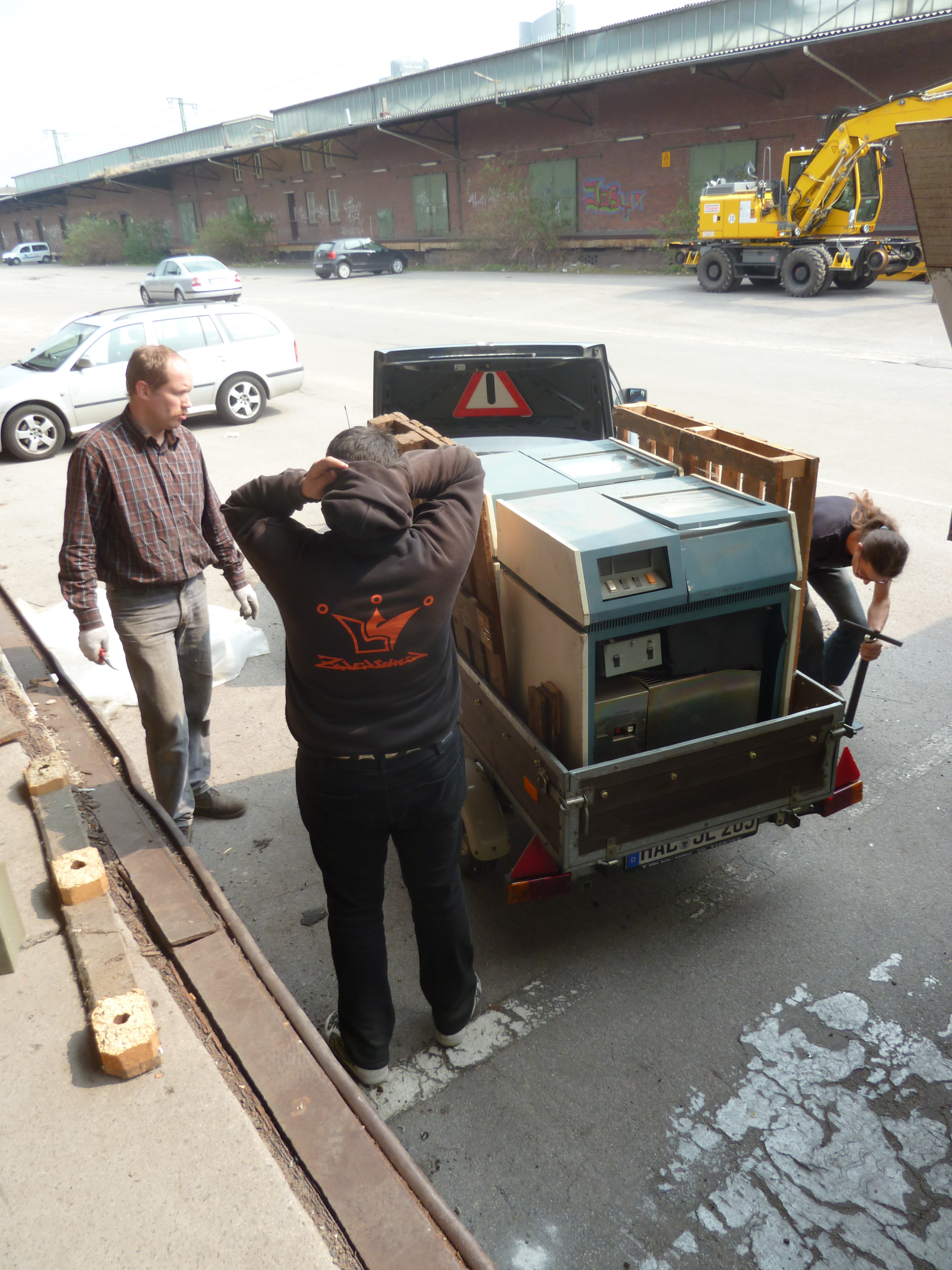
On site, we met very friendly classic computer enthousiasts
from the Robotron Museum who came to rescue systems and parts
for their collection. There was a very nice atmosphere in
trying to help each other to move heavy parts and cabinets
around, to part with the bits in a fair way and to identify
and estimate the conditions of these remainings. Those are the
days I appreciated a lot: When you can meet new people who
share this passion about vintage computing and save systems
together from being scrapped. And that's how I have been
knowing the classic computing community in Germany up to that
point in time.
However, for the first time, I also made less pleasant
experiences in this field.
Soon, the discussions in that robotron forum thread dealing
with the CMA remains where marked by rough tones of a person
who stated that the remainings left behind by the CHM in that
warehouse where "rejects" and therefore not worth or at least
not interesting to be picked up because of probably being
incomplete. This same person called Alexander (who discovered
the whole thing and opened the thread to save these systems)
as unfair, as he felt the systems were already rewarded to
others under doubtful circumstances.
Another bad surprise, we had to face, was the behavior of a
collector from north-east Germany who was at the warehouse
earlier than me. This person took the opportunity to take with
him two incomplete EAI 2000 analogue computers for somebody
else, I originally was supposed to deliver to. The person in
charge at the warehouse confound that guy with myself and
asked him, if he was the one supposed to bring these machines
to the person, who claimed interest in these. He said "yes"
and took everything with him. This was for me the first time
that I had to face such a doubtful behaviour from somebody
with the intention to put hands on vintage computers no matter
what!